By Chase Rohlfsen, RubLine Marketing
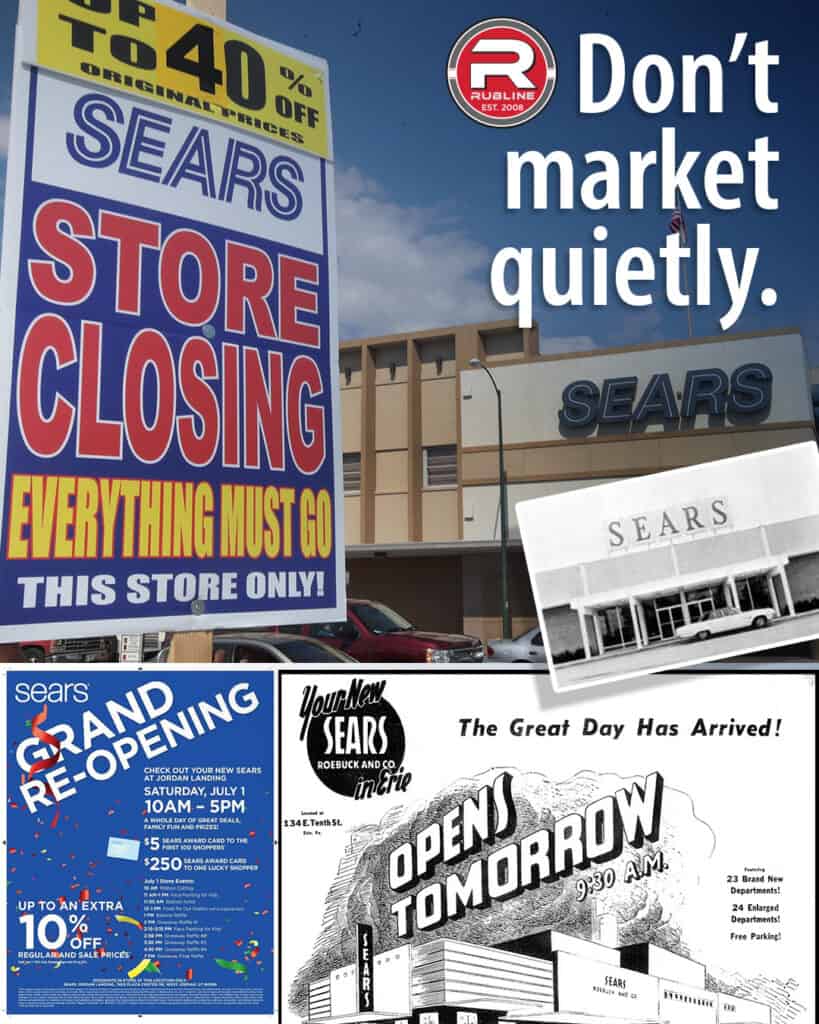
There’s a dangerous moment that happens to successful brands.
It’s the moment they start believing they’ve arrived.
Market share is strong. Sales are steady. The brand is recognizable. The phones still ring. And somewhere in a boardroom or budget meeting, someone asks the question:
“Do we really need to spend this much on marketing anymore?”
History tells us the answer is yes.
And Sears is the case study every modern brand should pay attention to.
They lost because they went quiet.
At one point, Sears was the most dominant retailer in America. They owned appliances, tools, and home goods. Brands like Craftsman and Kenmore were synonymous with quality. Their catalog built American retail. Their stores anchored malls across the country.
They believed they owned the market.
And once you believe that, marketing starts to feel optional.
In the late 1980s and 1990s, Sears leadership began cutting marketing, brand investment, and customer experience spending. The strategy was simple: protect margins by reducing costs.
Marketing was viewed as overhead instead of infrastructure.
They stopped reinforcing their value.
They stopped telling their story.
They stopped reminding customers why Sears mattered.
At the same time, competitors didn’t.
Walmart invested heavily in price and convenience.
Target invested in brand and experience.
Home Depot and Lowe’s invested in category authority.
Amazon invested in digital dominance before most retailers even knew it mattered.
Customers didn’t abandon Sears overnight.
They just stopped thinking about it.
And in marketing, absence is an invitation.
Once relevance is lost, you don’t get it back cheaply.
As Sears’ brand faded, the company was forced to compete on price instead of value. That erodes margins. That limits reinvestment. That accelerates decline. It becomes a cycle that’s almost impossible to reverse.
Sears filed for bankruptcy in 2018.
Not because they spent too much on marketing.
Because they stopped.
Marketing isn’t for when you need sales.
Marketing is for when you want to protect your position.
Strong brands invest when times are good.
Great brands invest when others pull back.
Smart brands understand that consistency beats bursts.
When you disappear from the conversation, someone else fills the space you left behind.
At RubLine Marketing, we see this pattern constantly. Brands don’t lose overnight. They erode quietly. A quarter here. A budget cut there. A pause in content. A delay in strategy. Then suddenly leadership is asking why growth stalled.
Marketing is not a switch. It’s a flywheel.
If you slow it down too much, restarting it costs exponentially more.
Sears didn’t fail because they were bad at marketing.
They failed because they believed they didn’t need it anymore.
And the market proved them wrong.
If you’re considering slashing your marketing budget because things “feel stable,” it might be the exact moment you need to double down instead.
Market leadership is rented.
And the rent is paid in consistency.
—
Chase Rohlfsen is the founder of RubLine Marketing, a strategy-first marketing agency that helps brands protect market share, build demand, and stay relevant in competitive categories.
"*" indicates required fields

